
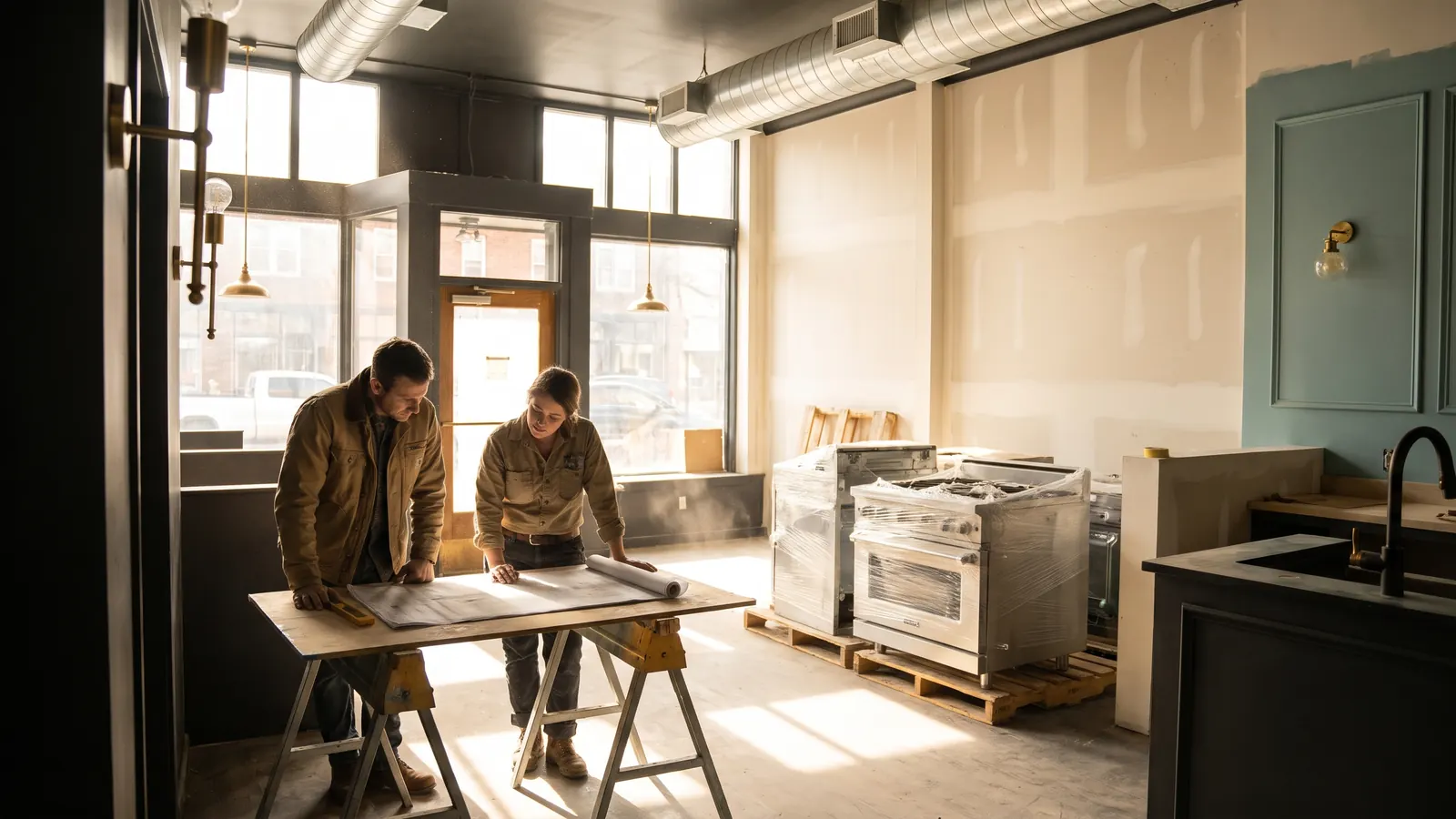
How much does it cost to open a restaurant? It depends most on the space you choose, then on your concept, your market, and how much existing infrastructure you can reuse. A widely cited 2018 survey of more than 350 independent restaurant owners by RestaurantOwner.com put the median startup cost at about $375,000, or roughly $3,586 per seat. Construction and equipment prices have climbed since then, so treat those figures as a historical baseline. Here's what drives the total, what belongs in the budget, a worked example, and the costs that catch owners off guard.
The space you choose drives the budget
The same survey broke out costs by the type of space:
| Type of space | Median startup cost (2018 survey) | What drives it |
|---|---|---|
| Former restaurant space | $275,500 | Hood, grease trap, plumbing, and restrooms may be reusable |
| Non-restaurant space, converted | $425,500 | Kitchen infrastructure gets built from scratch |
| New construction | $650,000 | You're building the structure as well as the restaurant |
A second-generation restaurant space can save a lot, but inspect it closely before you sign. A hood that doesn't meet current code, a grease trap that's too small, or electrical service that can't handle your equipment can erase the savings fast. Bring your contractor and kitchen designer to the walkthrough before the lease is signed.
What goes in a restaurant startup budget
Lenders and contractors split startup costs into hard costs, the physical build-out and equipment, and soft costs, like design fees, permits, legal work, and pre-opening payroll. Soft costs are the ones that get left off first budgets, so list every one of them line by line.
- Lease costs: security deposit, rent during build-out, and any key money. Negotiate free rent for the build-out period.
- Design and professional fees: architect, engineers, permit expediter, attorney, and accountant.
- Build-out: construction, electrical, plumbing, HVAC, hood and fire suppression, restrooms, and finishes.
- Kitchen and bar equipment: the cooking line, refrigeration, dish machine, ice machine, and bar equipment.
- FF&E: dining furniture, lighting, and decor. Here's what FF&E means and how to budget it.
- Smallwares and supplies: plates, glassware, pans, linens, and uniforms.
- Technology: POS hardware, network, and software setup.
- Licenses and permits: business license, health permit, sign permits, and a liquor license if you'll serve alcohol.
- Opening inventory: food, beverage, and paper goods.
- Pre-opening payroll and training: paying your team to learn the menu, the systems, and the service steps before the first guest arrives.
- Marketing and launch: website, photography, social, and opening events.
- Contingency and working capital: money for overruns, plus cash to run the business until sales cover costs.
How much does it cost to open a restaurant? A worked example
Here's a sample budget for a 60-seat restaurant going into a former restaurant space. These are round example numbers to show the math. Use real quotes for your own plan, because yours will differ.
| Line item | Example amount |
|---|---|
| Lease deposit and pre-opening rent | $25,000 |
| Design, permits, and professional fees | $20,000 |
| Build-out and repairs | $90,000 |
| Kitchen and bar equipment | $60,000 |
| Furniture, fixtures, and decor (FF&E) | $40,000 |
| Smallwares, supplies, and uniforms | $10,000 |
| POS, network, and software setup | $8,000 |
| Licenses and permits | $5,000 |
| Opening inventory | $12,000 |
| Pre-opening payroll and training | $20,000 |
| Marketing and launch | $10,000 |
| Subtotal | $300,000 |
| Contingency at 10% | $30,000 |
| Working capital, 3 months × $25,000 in fixed costs | $75,000 |
| Total to raise | $405,000 |
Two formulas sit underneath that table.
Contingency = subtotal × contingency rate. A common rule of thumb is 10 to 15 percent, with the high end for older buildings and ground-up projects.
Working capital = monthly operating costs × months of cushion. A common rule of thumb is three to six months of operating expenses. This example uses three months of fixed costs, which is on the lean side.
Divide the total by your seat count to compare plans side by side: $405,000 ÷ 60 seats = $6,750 per seat, all in. Then check the plan against your sales forecast. If the restaurant needs every seat full every night to repay the money, the budget is too big for the concept. Our guide to writing a restaurant business plan walks through the sales forecast and break-even math.
When the money goes out
Startup costs don't land all at once, and the timing matters as much as the total, especially if a loan funds in stages. A typical sequence:
| Phase | What you're paying for |
|---|---|
| Lease signing | Security deposit, any rent due before opening, and attorney fees |
| Design and permits | Architect, engineers, plan review, and permit fees |
| Construction | Contractor payments as work is completed, plus utility deposits |
| Ordering | Deposits on kitchen equipment and FF&E, especially custom pieces |
| Final weeks | Balances on equipment and furniture, smallwares, uniforms, and POS setup |
| Pre-opening | Training payroll, opening inventory, and launch marketing |
Lay your budget onto a month-by-month calendar so you know how much cash you need at each stage. If your lender funds construction in draws, that calendar shows whether the draws arrive before the bills do.
How to get real numbers
- Get at least three bids on the build-out, priced from the same drawings.
- For a second-generation space, ask the landlord for as-built drawings and the most recent health inspection report.
- Confirm electrical, gas, and water capacity before you design the kitchen.
- Get equipment quotes that include delivery, installation, and hookups.
- Call your local health department early. Many require a plan review before construction starts.
- Ask your state's alcohol agency about license types, costs, and timelines before you build the plan around a full bar.
Costs owners underestimate
- Delays. Every month a permit or inspection slips is another month of rent with no sales. At $8,000 a month in rent, a three-month delay costs $24,000 before you sell a plate.
- Pre-opening labor. Hiring and training a full team means weeks of payroll before opening day.
- Inspections and the fixes they turn up. Hood, fire, and health inspections can each send you back for changes, and every fix costs time as well as money.
- Insurance. General liability, property, workers' compensation, and liquor liability if you serve alcohol. Landlords usually want proof of coverage before you take possession.
- Liquor licensing. Costs and timelines vary widely by state. In states that cap the number of licenses, buying one can be among the largest checks you write.
- Monthly software. POS, online ordering, reservations, scheduling, and payroll subscriptions add up. Count them in the operating budget, too.
- Marketing after launch. Opening buzz fades. Budget for the months after the first rush.
Ways to open for less
- Take over a second-generation restaurant space after a careful inspection. When a restaurant closes, the next tenant can sometimes take over its furniture and equipment as part of the deal. Test everything, and confirm what's owned outright and what's still under a lease.
- Negotiate the lease. Ask for a tenant improvement allowance and free rent during the build-out.
- Buy used where it's safe. Stainless worktables, shelving, and sinks hold up well secondhand. Lease or finance the rest if cash is tight.
- Keep the opening menu tight. Fewer dishes means less equipment and a team that learns the menu faster.
- Phase the opening. A soft open with limited hours lets you fix problems before full service.
- Spend on what guests touch. Chairs, tables, lighting, and the plate in front of them shape the experience more than an expensive back-office upgrade.
A restaurant operations consultant can review your budget and pre-opening schedule before the money goes out the door, when changes are still cheap.
If you already run a restaurant and you're opening another, get your free AI assessment first. You answer about a dozen questions, our AI reviews them along with your Google listing, reviews, and website, and you get an evaluation of your operations and marketing gaps by email.
How Monarch helps
Through our restaurant operations consulting and our vendor network, we help owners plan the opening from the budget and pre-opening schedule to training, uniforms, furniture, and marketing. We do the work. You guide the process.
Want help with this?
Monarch handles operations consulting for restaurants as part of one white-glove team. We do the work. You guide the process. See how operations consulting works with us.
Get Your Free AI Assessment